Thursday, February 5, 2026

The Academia Report with Prof. Drea Two Narratives. One Nation. Two Diagnoses. One America.


Part 1 examines two landmark federal reports produced during the 1960s—the Moynihan Report (1965) and the Kerner Report (1968)—both commissioned by the U.S. government to diagnose the condition of Black America. Though written within three years of each other and addressing the same crisis, these reports offered radically different explanations. The Moynihan Report argued that family structure had become the primary barrier to Black progress, shifting attention toward household instability, employment, and social behavior. The Kerner Report, by contrast, declared that America was moving toward “two societies, one Black, one white—separate and unequal,” placing responsibility squarely on structural racism, segregation, housing policy, policing, and economic exclusion. This lecture places both reports in their full historical context—slavery, Jim Crow, redlining, segregation, and mass incarceration—and challenges the long-standing practice of treating these forces as background rather than as active systems shaping outcomes. It confronts America’s era of benign neglect, when structural reform was abandoned in favor of cultural blame, and asks why one narrative was absorbed into political language while the other was ignored. This is not a debate show. This is a historical and intellectual reckoning. Two Narratives. One Nation is the beginning of a multi-part lecture series examining how policy, power, and narrative have shaped the modern Black experience—and how the stories a nation chooses determine the solutions it is willing to pursue.

Wednesday, February 4, 2026

If You Can't Court Me, You Can't Touch Me


We need to bring back courting. And before anyone gets confused, let me define it.

Courting is an intention.
Courting is an effort.
Courting is clarity.

It is real dates. Planned dates. Public dates. Not “your house or my house.” That is not a date. That is convenience disguised as interest.

How We Got Here

Somewhere along the way, we lowered the standard and renamed it flexibility. We started calling access connection and effort optional. We allowed people into our bodies, our beds, and sometimes our lives without ever asking them to show us who they were when it actually mattered. And then we act surprised by the outcome.

How do you build a life with someone who never took you on a real date?
How do you share a child with someone who never shared the intention?


What Courting Actually Means

Courting is not old-fashioned. It is foundational. It tells you how someone values time. How they handle responsibility. How do they show care when nothing is guaranteed? Courting creates a container where discernment can live. It slows things down just enough for truth to show itself. It makes room for observation instead of assumption, consistency instead of chemistry.


The Standard I Stand On

And here is the part people don’t like to hear: If they cannot court you, they do not get access to you.

Not your body.
Not your energy.
Not your softness.

Courting is not about being difficult. It is about being deliberate. And I am no longer confused about the difference.


Why This Matters

Courting protects everyone involved. It gives space for discernment. It allows red flags to show themselves without being masked by chemistry. It creates room for God, wisdom, and time to speak.

If someone tells you courting is “old-fashioned,” what they usually mean is that it requires effort they’re unwilling to give. I’m not asking for perfection. I’m asking for presence. I’m not asking to be impressed. I’m asking to be considered.


Love Doesn’t Rush

I’ve learned that love doesn’t rush. Lust does. Ego does. Fear does. But love moves with intention. Love shows up with a plan. Love honors boundaries instead of negotiating them away. So no, I’m not confused. I’m clear. Courting is the standard. And anything less no longer has access to me.


Call to Action

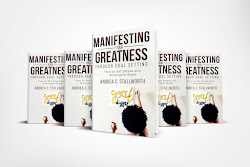
If this essay resonated with you, I’m writing a book about healing, standards, and becoming whole after heartbreak. It’s about choosing yourself, protecting your peace, and never settling for convenience disguised as love.


Monday, January 12, 2026

If I Had to Heal From You, You Don’t Get Access to Me


If I cried over you, not the Jodeci Cry For You kind but the kind that sent me to therapy, unraveled my nervous system, and forced me to learn the difference between love and endurance, I am not letting you back into my life.

That sentence did not come easily. It was earned.

For a long time, I believed forgiveness meant reopening doors. Answering texts. Letting nostalgia blur the truth. Allowing familiarity to masquerade as safety. I was taught explicitly and implicitly that grace required proximity. That healing meant making room. That being spiritually mature looked like access. No one told me how much of myself I was surrendering in the process.

Last year’s heartbreak did not arrive dramatically. It came quietly through patterns. Through emotional inconsistency dressed up as misunderstanding. Through moments where my body knew something, my heart was still negotiating. I kept explaining behavior that did not need explanation. I kept offering compassion where accountability should have lived.

And then I broke.

Not loudly. Not publicly. But in the slow, destabilizing way that changes how you move through the world. I cried in therapy sessions where I had to say things out loud that I had been minimizing for months. I learned language from what I experienced. I learned how often I overrode my own boundaries just to keep the connection alive.

Healing asked me better questions than love ever did.

Why did I stay when my body was signaling danger?
Why did I confuse patience with self-abandonment?
Why did I think forgiveness was proof of strength?

The hardest part was not letting go of you. It was letting go of who I was when I loved you. I had to grieve the version of myself who believed loyalty required suffering. Who thought understanding someone’s wounds meant absorbing their harm? Who believed endurance was devotion.

Therapy did not make me bitter. It made me honest. And honesty removed the illusion that reconciliation was required for peace. Forgiveness is internal. Reconciliation is relational.

Forgiveness lives in my breath, my prayers, my nervous system, finally at rest. Reconciliation requires safety, consistency, and repair. You did not offer those. And I stopped negotiating with absence.

So no, I do not hate you. I do not need revenge. I do not need closure conversations that reopen wounds I worked hard to close.

I forgive you.

But healing changed my access points. It taught me that peace sometimes looks like distance. That love can exist without proximity. That choosing myself does not require an explanation. If I had to rebuild myself after you, you do not get to meet who I became.

Forgiveness does not require reconciliation. It requires truth. And the truth is, I am no longer available for what broke me.

Friday, December 19, 2025

Free Me From the “Girl’s Girl” Label


I want to say this carefully, because nuance matters.

I’m not anti-women.
I’m not anti-sisterhood.
I’m not anti-community.

However, I am deeply uninterested in performative labels that don’t align with my actual behavior.

Somewhere along the way, “girl’s girl” became a badge people wear instead of a practice they live. And in my experience, many of the loudest claims of sisterhood have come from spaces that felt unsafe, competitive, passive-aggressive, or quietly cruel.

I’ve learned that not every woman who smiles at you is for you.
Not every “sis” is safe.
And not every space labeled empowering actually empowers.

And that truth doesn’t make me bitter.
It makes me discerning.

I no longer need to be called a girl’s girl.
I need integrity.
I need emotional maturity.
I need accountability.
I need women who can celebrate without comparison, support without competition, and communicate without manipulation.

I’ve been in rooms where the language was “support,” but the energy was envy.
Where the connection felt conditional.
Where success made people uncomfortable.
Where vulnerability was collected, it was not protected.

And I’ve also been blessed by women who showed up quietly, consistently, and without performance. Women who didn’t need to announce their loyalty. Women who didn’t need a label to be decent.

That’s the difference.

Real sisterhood doesn’t need branding.
It needs character.

I also noticed something else this year, and I paid attention.

When I got engaged, the energy shifted with certain women. Subtle at first. Then obvious. Women who once checked in consistently when I was single and healing suddenly went quiet. The “hey sis” texts slowed down. The likes disappeared. The shares stopped. The calls became nonexistent.

So I did what I always do: I observed.

I went ghost from social media for a few months, not to test anyone, but to protect my peace and heal from my breakup. And in that silence, patterns revealed themselves. Support that once felt abundant evaporated the moment my life expanded. And that told me everything I needed to know.

I realized some people weren’t connected to me; they were connected to a version of me that felt non-threatening. A version they could relate to, advise, or feel superior to. When that version evolved, so did their discomfort.

I didn’t confront.
I didn’t explain.
I didn’t announce anything.

I simply peeped the energy and did a full sweep.

No warnings. No speeches. Just boundaries.

Because I’m not in competition with anyone. I’m not auditioning for space in anyone’s life. And I refuse to stay connected to people who only celebrate me when I’m struggling, but grow distant when I’m chosen, loved, or aligned.

What stood out most was the irony.

Many of the same women who claimed “girl’s girl” and “women empowerment” energy were the ones moving strangely online and in person once they realized I wasn’t engaging in the nonsense, the comparison, or the unspoken tension.

That’s when it clicked for me.

Labels mean nothing without character.
And empowerment that collapses under another woman’s joy isn’t empowerment at all.

At this stage of my life, I’m choosing relationships rooted in alignment, not optics. I’m choosing peace over proximity. Discernment over belonging. Depth over labels.

If that means I don’t fit neatly into someone else’s definition of a “girl’s girl,” I’m okay with that.

I don’t need a title.
I need truth.
I need safety.
I need a grown-woman connection.

And I trust myself enough now to choose that quietly, cleanly, and without apology.


Thursday, December 18, 2025

Black America"s Relationship with Mental Health:


Black America’s Relationship with Mental Health explores one of the most critical and often overlooked dimensions of our community’s well-being—how history, culture, and access shape the way we experience and talk about mental health. For generations, Black families have carried the weight of collective trauma, systemic inequality, and cultural stigma around seeking therapy or emotional support. This discussion shines light on those realities while reclaiming a narrative rooted in healing, self-awareness, and community care. In this special episode, Let’s Talk 2 brings together voices from across the spectrum—therapists, advocates, parents, and youth—to unpack why mental health remains a complex topic in Black America. We look at the statistics: suicide is now the third leading cause of death among Black youth aged 15-34, yet access to culturally competent care remains dangerously low. Many in our community still encounter barriers of cost, trust, and representation, with only about 5% of psychologists identifying as Black. The conversation challenges the silence. It embraces new approaches rooted in empathy, spirituality, and cultural understanding. It asks how we can normalize seeking help, expand awareness of resources like the 988 crisis line, and strengthen family and faith-based support systems that already exist within our communities. Together, we’re breaking the stigma—turning pain into purpose, and silence into strength. Healing begins when we talk about it.

Black America's Relationship with Mental Health Part 2


Black men in America stand at the crossroads of strength, survival, and silence. For generations, they have been expected to carry the weight of families, communities, and society while hiding their own emotional wounds. This episode of Black America’s Relationship With Mental Health – Part 2 focuses directly on the experiences, challenges, and healing journeys of Black men. From historical trauma to modern-day pressures, Black men face a unique set of emotional and psychological demands. Racism, economic instability, over-policing, incarceration, and cultural expectations of toughness often leave little room for vulnerability. Many Black men are taught early on that expressing pain is a weakness and that asking for help is unacceptable. These beliefs, combined with systemic barriers to care, have created a silent crisis—one where depression, anxiety, PTSD, and emotional exhaustion are far more common than openly discussed. This episode breaks the silence. We explore the mental-health struggles that many Black men secretly face, the stigma that keeps them quiet, and the urgent need for culturally competent support systems. We highlight the importance of safe spaces—barbershops, brotherhood circles, faith communities, therapy, mentorship, and honest conversations between fathers and sons. Through personal stories, expert insight, and community dialogue, this conversation centers on reclaiming emotional freedom. It challenges the narrative that Black men must suffer alone. Instead, we uplift new narratives of accountability, vulnerability, and healing—reminding Black men that strength does not mean silence. This show is a call to action: to check on Black men, to honor their humanity, and to build environments where they can breathe, express, and heal without judgment. Healing is not just possible—it is necessary. And together, we can create a future where Black men are fully supported, emotionally empowered, and mentally free.

Wednesday, December 10, 2025

How to Outsmart Imposter Syndrome and Unleash Your Full Potential Written by Kevin Ogle, Featured Blogger


Introduction

Imposter syndrome feels like walking into every room convinced someone’s going to “find you out.” You might have the job, the credentials, the applause — yet deep down, you suspect you’ve somehow fooled everyone. This psychological tug-of-war can quietly sabotage even the most capable individuals. But the truth? You belong here.

Key Takeaways

Imposter syndrome is the persistent belief that you’re not as competent as others think you are — despite evidence to the contrary. It leads to anxiety, self-doubt, and overwork. To conquer it:

     Recognize the thought patterns.

     Reframe failure as feedback.

     Build a self-validation routine.

     Strengthen your skills to reinforce confidence.

What Is Imposter Syndrome?

Imposter syndrome is a psychological pattern where people doubt their accomplishments and fear being exposed as “frauds.” It’s not tied to actual competence; it’s tied to distorted perception.

Common symptoms include:

     Chronic self-doubt and perfectionism

     Dismissing praise or attributing success to luck

     Overpreparing or overworking to “prove” worth

     Comparing yourself constantly to others

     Feeling unworthy of opportunities or recognition

If you see yourself here, you’re in good company. Researchers estimate up to 70% of professionals experience imposter feelings at some point in their lives.

Checklist: How to Reclaim Your Confidence

  1. Name it. Call out imposter thoughts when they appear.

  2. Challenge distortions. Ask: “What evidence disproves this?”

  3. Keep a success log. Write down achievements, big or small.

  4. Normalize struggle. Everyone — yes, everyone — starts uncertain.

  5. Share openly. Talking with peers breaks the isolation loop.

  6. Set realistic goals. Perfection isn’t proof; progress is.

  7. Celebrate wins without disclaimers. No “buts,” no “justs.”

Quick Table: Common Triggers & Reframes

Trigger Thought

Emotional Impact

Constructive Reframe

“I don’t deserve this role.”

Anxiety, fear

“I earned this through consistent effort.”

“I’m not as smart as my peers.”

Shame

“Everyone brings different strengths.”

“If I fail, they’ll find out I’m not capable.”

Panic

“Failure is feedback, not a verdict.”

“It was just luck.”

Discrediting success

“Luck played a part, but so did my preparation.”

How-To: Build Emotional Resilience

     Step 1: Accept that confidence is a skill, not a trait.

     Step 2: Practice mindful self-talk — your inner dialogue shapes your self-image.

     Step 3: Create a daily self-affirmation habit (start with one line like “I am capable and learning.”)

     Step 4: Seek mentorship — trusted advisors help you see yourself clearly.

     Step 5: Revisit your “wins file” when doubt creeps in.

Tip: Pair this with personal development tools like MindTools’ Confidence Toolkit, or learn about emotional resilience at Psychology Today.

Strengthen Your Foundation Through Learning

Building competence is one of the most powerful antidotes to imposter feelings. Upskilling not only increases your knowledge but rewires your brain’s “I don’t belong” narrative.

If you’ve ever thought, “I just need to know more before I can…” — consider structured growth through education. Expanding your skills in technology, leadership, or creative domains can solidify your sense of self-efficacy.

For example, earning a computer science degree equips you with problem-solving frameworks and technical fluency — traits that boost confidence in the digital age. Many programs are built to fit around work and life demands. To explore one flexible option, check out this resource.

Featured Resource: Building Confidence with Skillshare

If full-time study feels like a stretch, short learning bursts can be transformative. Platforms like Skillshare offer bite-sized creative and professional development courses — from presentation confidence to coding — that reinforce capability without overwhelming your schedule.

FAQ: You’re Not Alone

Q: Is imposter syndrome the same as low self-esteem?
 A: Not exactly. Imposter syndrome often affects high achievers who have self-esteem; it’s more about distorted thinking than lack of ability.

Q: Can therapy help?
 A: Absolutely. Cognitive-behavioral therapy (CBT) can reshape internal narratives and reduce perfectionism patterns.

Q: Does it ever go away completely?
 A: It can fade significantly with awareness, support, and practice — but even confident people occasionally revisit those feelings. The key is managing, not erasing them.

Bonus List: Grounding Reminders for “Fraud” Days

     You’ve earned your place.

     Confidence is built, not bestowed.

     Doubt is a sign of growth, not incompetence.

     You are becoming the expert you once looked up to.

Conclusion

Imposter syndrome thrives in silence but weakens in clarity. When you name it, normalize it, and take consistent steps toward self-trust, you start reclaiming your energy from fear. Remember — confidence isn’t the absence of doubt; it’s the decision to act anyway.